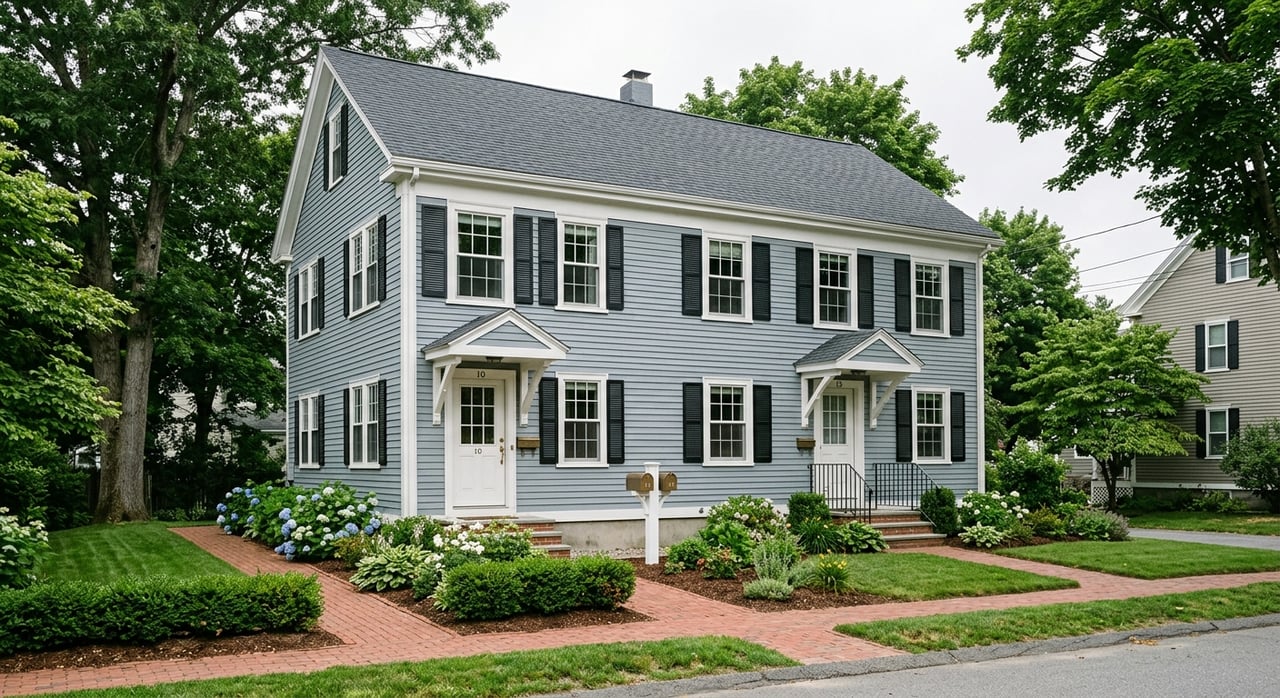
Thinking about buying a multi-family property near Swansea? You are not alone. For many buyers, this corner of the South Coast and nearby East Bay looks like a practical way to live in one unit, offset housing costs, or build long-term wealth with a smaller property. The key is knowing where demand is stronger, where zoning is tighter, and where the numbers need a closer look. Let’s dive in.
Why Swansea Gets Investor Attention
Swansea sits in an interesting spot for small multi-family investing. It gives you access to the broader East Bay orbit while often feeling more like an owner-occupied community than a dense rental market.
That matters because Swansea is a relatively small town with an estimated 17,537 residents in 2024. It also has a high owner-occupied housing rate of 86.6%, and the Census reports a median gross rent of $1,332. In plain terms, this is not a market flooded with large rental inventory.
For many buyers, that creates a mixed picture. On one hand, limited supply can support demand for well-located rentals. On the other hand, lower rents can make pure cash-flow investing harder if you buy at too high a price.
Swansea Zoning Shapes Your Options
Before you get too far into the search, it helps to understand the local zoning picture. In Swansea, zoning is a big part of the investing story.
Multifamily Is Not Widely Allowed By Right
Swansea’s base zoning districts are RR, BA, BB, and M. The town’s use table allows single-family homes by right in RR and BA, while accessory apartments in RR and BA require a special permit.
Multifamily residential development is allowed by right only in the Swansea Mall Redevelopment Overlay District. That overlay permits up to 72 dwelling units, heights up to 60 feet and four stories, and one parking space per unit.
For a small investor, that means Swansea is generally a constrained market for creating new multifamily inventory. You are more likely to be evaluating existing properties, legal accessory apartment situations, or homes with owner-occupant potential than finding easy by-right development opportunities.
Floodplain Review Can Affect A Deal
Swansea also has a Floodplain Overlay District. That means flood-map status is not a side issue. It can affect insurance costs, renovation planning, lender requirements, and your monthly carrying costs.
If you are comparing two similar properties, flood exposure may be the factor that changes the deal from workable to risky. This is one reason local due diligence matters so much in Swansea.
How Nearby East Bay Markets Compare
If your search area includes nearby Rhode Island towns, the picture changes quickly. The East Bay has more rental depth, but it often comes with higher acquisition costs and more competition.
Rental Mix Is Stronger In Nearby Towns
Several nearby communities have a much larger renter base than Swansea. Barrington is heavily owner-occupied at 89%, and Portsmouth is also owner-heavy at 80.7%. But Bristol is closer to 69% owner-occupied and 31% renter-occupied, Warren is 61% owner-occupied and 39% renter-occupied, and Newport is nearly evenly split at 49.8% owner-occupied and 50.2% renter-occupied.
That tells you something important. If you want a market with deeper tenant demand and a longer-standing rental culture, Bristol, Warren, Newport, and parts of Portsmouth may offer more options than Swansea.
East Bay Has More Small Multifamily Stock
Bristol’s housing profile helps show the contrast. About 70.2% of Bristol housing units are single-family, but 11.9% are two-family and 17.9% are multifamily with three or more units.
That is a much richer small-multifamily mix than Swansea’s base zoning tends to support. For a buyer looking for a duplex, triplex, or small mixed-use style investment pattern, nearby East Bay towns may simply offer more inventory to choose from.
What Supports Rental Demand In The Region
Strong investing decisions start with demand, not just a cap rate. In the East Bay and nearby Southeast Rhode Island, several local factors support renter demand.
Jobs, Schools, And Regional Activity Matter
HousingWorks RI describes Southeast Rhode Island as a tourism hub shaped by coastal conditions and development constraints. The region is 69% owner-occupied and 31% renter-occupied, and 47% of renters are cost burdened.
Major job sectors include government, accommodation and food services, health care and social assistance, retail trade, and professional and technical services. Colleges and institutions including Roger Williams University, Salve Regina, CCRI-Newport County, and the Naval War College also add to the renter pool.
Transit Broadens The Pool In Swansea
Swansea is in the Southeastern Regional Transit Authority service area. That may modestly widen the renter pool for households looking for transportation options beyond driving everywhere.
It will not turn Swansea into a dense urban rental market, but it does add a layer of practical access that can matter for some tenants.
Rents Show Pressure In Nearby Towns
Nearby East Bay towns show clear signs of rental pressure. Bristol’s average two-bedroom rent is $2,002, Warren’s is $2,692, Newport’s median gross rent is $1,698, and Portsmouth’s median gross rent is $1,719.
Cost burden data supports that picture. About 39% of renters in Bristol are cost burdened, 48% in Warren are cost burdened, and 59% in Newport are cost burdened. Those numbers point to steady demand, even if affordability remains a challenge for renters.
What Returns Look Like Right Now
This is where many buyers need a reality check. A good investment is not just about buying a multi-family property. It is about buying one at a price and expense level that still leaves room for performance.
Institutional Cap Rates Are Only A Starting Point
CBRE’s Q2 2025 survey put average core multifamily going-in cap rates at 4.75% and value-add going-in cap rates at 5.20%. Those are useful benchmarks, but they usually run tighter than what small-asset investors see in secondary New England markets.
In other words, those numbers can help frame the conversation, but they should not be treated as the expected result for a local duplex or small apartment building in this area.
Rhode Island Fundamentals Still Look Tight
For Rhode Island multifamily properties with five or more units, statewide vacancy was 2.8% in Q4 2024, with 4.0% asking rent growth. In the Newport and Bristol submarket, vacancy was even tighter at 1.6%, average transaction price per unit was $140,630, and asking rent growth was 2.9%.
That suggests real demand, but also expensive supply relative to income. Tight vacancy is helpful, but it does not guarantee an easy deal if the purchase price is aggressive.
A Practical Small-Asset Range
Current marketed examples in the region suggest asking cap rates around 6.5% in Bristol, 7.2% in Warren, and 7.4% in a Bristol County result. These are asking cap rates, not closed-sale averages, but they help show a practical working range.
For many better-located small multifamily properties, a high-5% to low-7% cap rate range is a useful lens. Higher cap rates may show up more often in value-add situations or inland locations, where more work or more management intensity is required.
The Best Fit For First-Time Investors
If you are new to investing, Swansea and the nearby East Bay may reward a practical strategy more than a purely passive one.
House Hacking May Be The Smartest Entry
Because Swansea has a lower rent base and limited by-right multifamily supply, pure cash-flow deals can be tight. For many first-time buyers, a more realistic approach is buying a property where you can live in one unit and improve income on the others over time.
That kind of setup can reduce your housing cost while giving you hands-on experience with operations, maintenance, and tenant management. It also helps if rents are not high enough to make an absentee-owner model pencil easily on day one.
Accessory Apartment Opportunities Need Careful Review
Accessory apartments can also be part of the strategy, but they need close review. In Swansea, accessory apartments in RR and BA require a special permit, so legal status matters.
You should verify permit history, current use, and whether the layout and parking comply with local rules. Never assume an extra kitchen or finished lower level counts as a legal unit.
Risks You Should Underwrite Carefully
Older small multifamily properties can work well, but only when the numbers include real-world risk. This is especially true in a cross-border search area that includes both Massachusetts and Rhode Island.
Lead Compliance Is A Major Issue
Lead paint rules matter in older housing stock. In Massachusetts, lead hazards must be removed or controlled in homes with children under age 6, and if a home built before 1978 is being sold or rented, sellers, real estate agents, and owners who rent must notify buyers and tenants about lead risks.
In Rhode Island, owners of pre-1978 rental properties that are not exempt must obtain a Certificate of Lead Conformance under the state’s Lead Hazard Mitigation Law. Rhode Island also offers a tax credit of up to $5,000 per dwelling unit for certain lead remediation.
Older Buildings Need Bigger Repair Reserves
Bristol offers a useful reminder here. The town’s median home was built in 1966, and 32.5% of housing units were built before 1949.
For investors, that means older East Bay properties may come with more systems risk. Roofs, plumbing, electrical, windows, siding, and exterior envelope issues can all affect your budget quickly.
Flood And Coastal Exposure Can Change Costs
Flood exposure deserves its own line item. Swansea’s Floodplain Overlay District and broader coastal resiliency constraints in Southeast Rhode Island mean some properties will carry higher insurance costs or future mitigation needs.
When you underwrite a deal, it is smart to use conservative reserves for older coastal or near-coastal buildings. A property that looks attractive on paper can feel very different once insurance and capital needs are fully included.
Your Due Diligence Checklist
Before you make an offer, slow down and confirm the basics. A careful review can protect you from expensive surprises.
Focus On These Key Items
- Legal unit count
- Permit history for any accessory apartment or conversion
- Parking compliance
- Utility separation
- Flood-map status
- Rent roll strength under a conservative expense ratio
These checks are especially important in Swansea, where zoning can be restrictive, and in older East Bay properties, where age and prior alterations may create extra complexity.
Bottom Line For Swansea And East Bay Investors
Swansea is best viewed as a lower-rent, higher-owner-occupancy entry point near the East Bay, not as an easy market for large-scale multifamily expansion. Nearby Bristol, Warren, Portsmouth, and Newport tend to offer deeper rental demand and more small multifamily stock, but they also often bring higher prices and more operational complexity.
If you are buying your first multi-family property, the most realistic path may be a house hack, a carefully reviewed accessory-apartment opportunity, or a conservatively underwritten small multifamily asset nearby. The right choice depends less on hype and more on zoning, legal use, real expenses, and a clear plan from day one.
If you want a calm, local read on Swansea and nearby East Bay opportunities, Brian Jodoin can help you compare towns, review property fit, and move forward with a clear plan.
FAQs
What makes Swansea different from nearby East Bay towns for multi-family investing?
- Swansea has a higher owner-occupied housing share, lower median rent, and more restrictive zoning for multifamily development than nearby towns like Bristol, Warren, and Newport.
What is the best multi-family strategy for a first-time investor in Swansea?
- For many first-time investors, the most practical strategy is often owner occupancy in one unit while improving rent or operations in the other unit or units over time.
What should you verify before buying a multi-family property in Swansea?
- You should confirm legal unit count, permit history, parking compliance, utility setup, flood-map status, and whether the rent roll still works with conservative expenses.
Why do nearby Rhode Island towns attract more multi-family investors?
- Nearby East Bay towns often have stronger rental demand, more renter households, and a larger existing stock of two-family and multifamily properties.
How do lead paint rules affect multi-family investing in Massachusetts and Rhode Island?
- Lead compliance can be a major cost and legal issue in older properties, so buyers should review age of construction, disclosure requirements, and any required remediation or certification before closing.
Are cap rates in Swansea and the East Bay high enough for passive cash flow?
- Some deals may work, but many smaller properties in this area require careful underwriting, and first-time buyers often find owner-occupied or value-add strategies more realistic than fully passive cash-flow plays.
