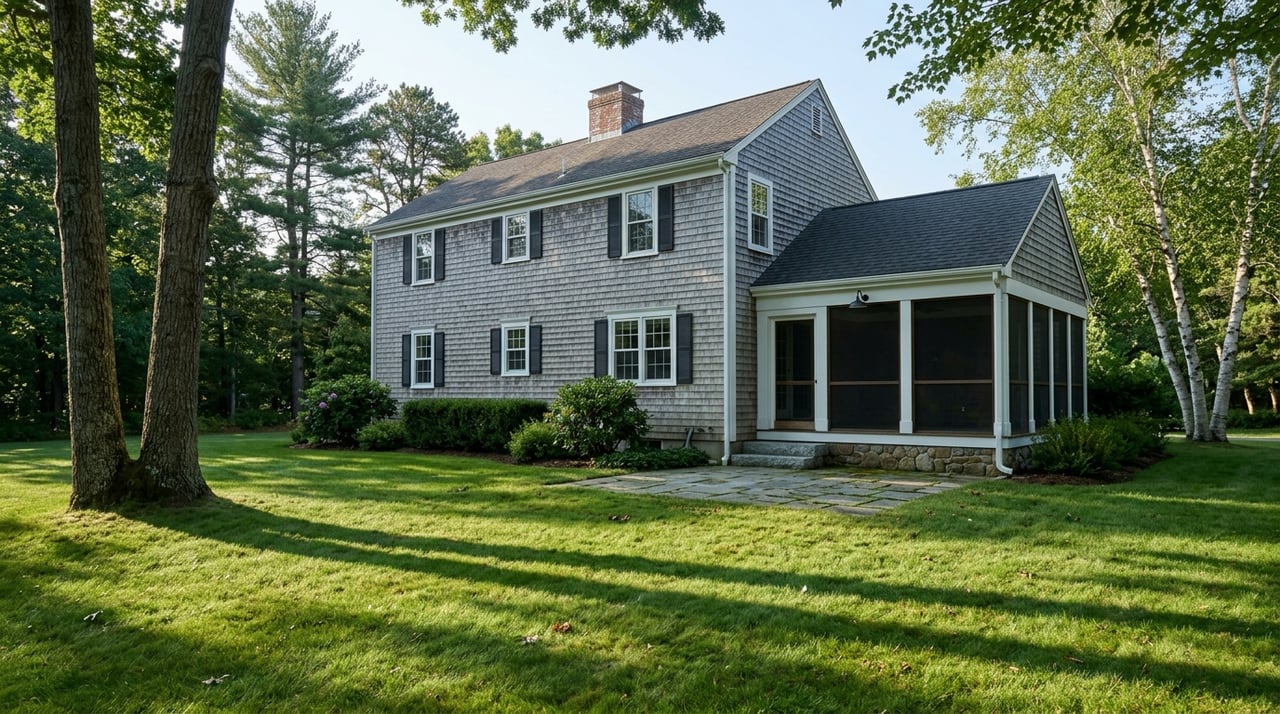
If you are craving more room to breathe, Rehoboth may be the kind of place that feels like a reset. Many buyers want a home with more land, less noise, and a slower daily rhythm, but they also want to understand what that lifestyle really looks like before they make a move. In this guide, you’ll get a clear picture of why Rehoboth stands out for country living, what everyday life can feel like, and what to check before you buy. Let’s dive in.
Why Rehoboth Feels More Rural
Rehoboth has a long history and a distinctly lower-density layout than many nearby communities. The town was founded in 1643, and Census QuickFacts shows 46.93 square miles of land with 12,502 residents in the 2020 census and an estimated 13,567 residents in 2025. That works out to about 266.4 people per square mile, which helps explain why the town feels more open and spread out.
The town also describes itself as a small suburban community in southeastern Massachusetts, while local materials note a mostly rural landscape with vast wooded areas. For you as a buyer, that often translates to larger setbacks, more visual privacy, and a little more distance from the pace of denser suburbs.
Space Is Part of the Design
Rehoboth’s zoning framework supports its country-style feel. In the Residence/Agricultural District, the minimum lot area is 60,000 square feet with 200 feet of frontage. Those standards can shape the look and feel of the streetscape by limiting density and preserving a more spacious pattern of development.
The town’s bylaws also address retreat lots, which are intended to reduce building density and preserve open space while still allowing single-family use on larger tracts. These lots require 360,000 square feet and 90,000 square feet of contiguous uplands. The same bylaws also reference protections for agricultural, livestock, and equestrian farms, which reinforces the land-oriented identity many buyers are looking for.
What Buyers Often Love About Rehoboth
For many buyers, the biggest draw is simple: more land, more privacy, and more quiet. If your goal is a home where outdoor space is part of daily life, Rehoboth naturally fits that search. You may find the setting appeals to you if you want room for gardening, hobby farming, recreation, or simply a little more separation from neighbors.
Another part of the appeal is the atmosphere. Country living is not just about acreage. It is also about how your surroundings feel when you pull into the driveway, step outside in the morning, or spend time in your yard at the end of the day.
Outdoor Access Adds to the Lifestyle
Rehoboth offers simple ways to enjoy the outdoors close to home. Rehoboth State Forest is a 138-acre state forest with a gentle 1-mile loop trail, plus a spur trail to an Atlantic white cedar swamp. Activities there include hiking and hunting.
The town also highlights parks and museums as part of its local identity. If you like the idea of a quieter setting without giving up opportunities to get outside, that balance can be part of what makes Rehoboth appealing.
Local Character Beyond the Land
Rehoboth is not only about open space. The town also has a modest but meaningful historic and cultural layer that adds character to day-to-day living. Local resources highlight places such as Blanding Library, Carpenter Museum, Arts in the Village, and the Rehoboth Antiquarian Society.
For buyers who want a home with a little breathing room but still value community texture, that matters. It gives the town more depth than a place that functions only as a residential stop between work and home.
What Everyday Life Looks Like
Country living often comes with tradeoffs, and it helps to go in with clear expectations. Rehoboth is very much a road-access town. The local fire department notes that its jurisdiction includes Interstate 195 and State Highways 6, 44, and 118, and Census QuickFacts reports a mean travel time to work of 29.5 minutes for 2020 through 2024.
In practical terms, that means your routine may involve more driving than it would in a denser suburb. For some buyers, that is an easy trade for space and privacy. For others, it is something to weigh carefully against work, errands, and school schedules.
Basic Services Are in Place
A rural feel does not mean a lack of town services. Rehoboth’s homepage lists ambulance, police, fire, REMA, a public health nurse, highway services, and trash and recycling. The town also points residents to online permits, assessor maps and property cards, a community senior center, and parks and museums.
That matters because many buyers want country living without feeling disconnected from basic municipal functions. Rehoboth offers that balance, but it still helps to understand how services may work differently from what you are used to in more built-up areas.
Wells and Septic Matter Here
One of the most important practical details in Rehoboth is that the town has no municipal water system. The fire department specifically notes this as part of how local fire response is planned, including the use of multiple stations, tanker trucks, and brush equipment.
For you as a buyer, that means water-system details should be part of your due diligence. The town also highlights septic and well repair loan availability and provides a water-well geo-mapping report. If you are considering a property in Rehoboth, these are not small details. They are core parts of understanding how the property functions.
Due Diligence Matters on Larger Lots
In Rehoboth, a large parcel is not automatically the same thing as a straightforward building opportunity. The town’s conservation FAQ notes that Conservation Commission approval is only one part of the process. A buildable lot still needs the required upland or dry area and minimum setbacks, and some situations may require variances or zoning review.
This is especially important in a town where wetlands, frontage, and buildable area can shape what a parcel can realistically support. If you are comparing homes or land in Rehoboth, it helps to look beyond the listing description and focus on what the site can actually do.
Town Tools Can Help You Research
Rehoboth provides useful online tools that can support your property review. The town offers zoning maps, assessor maps and property cards, online building permits, and permitting guidance. These resources can help you ask better questions and spot issues early.
That kind of preparation can make a big difference in a country-market purchase. It supports a smoother process and helps you avoid assumptions based on lot size alone.
School Planning Is Part of the Picture
If school logistics are part of your move, Rehoboth is part of the Dighton-Rehoboth Regional School District. The town lists Palmer River Elementary, D.L. Beckwith Middle School, and Dighton-Rehoboth Regional High School. It also points to Bristol County Agricultural High School and Bristol-Plymouth Regional Technical School as nearby options.
The key takeaway is practical planning. In a more spread-out town, route planning, daily drive times, and school location can all play a bigger role in your decision than they might in a compact community.
Who Rehoboth May Fit Best
Rehoboth can be a strong fit if you want acreage, privacy, and a quieter pace. It may also appeal to you if you are comfortable trading some convenience for space, road-based access, and property-specific due diligence.
That does not make it the right fit for every buyer, and that is okay. The goal is not just to buy more land. It is to choose a lifestyle that matches how you want to live day to day.
How to Evaluate a Rehoboth Move
If Rehoboth is on your shortlist, it helps to evaluate the move through a few simple questions:
- How much land do you actually want to maintain?
- Are you comfortable with a road-based daily routine?
- Do you understand the well, septic, and permitting details tied to the property?
- Does the lot offer usable upland area and required setbacks?
- Does the setting match your long-term lifestyle goals?
A clear process matters here. The right home is not only about charm or square footage. It is also about whether the property works well for the way you plan to live.
If you are exploring country living in Rehoboth and want calm, local guidance on how to compare properties, review the details, and move forward with confidence, Brian Jodoin can help you navigate the process with clarity.
FAQs
What makes Rehoboth feel like country living?
- Rehoboth has low population density, larger lot requirements in key zoning districts, and a landscape the town describes as mostly rural with vast wooded areas.
What should you check before buying land or a home in Rehoboth?
- You should review zoning, frontage, wetlands, upland or dry area, setbacks, and whether any part of the property may need variance or zoning review.
Does Rehoboth have town water?
- No. The town’s fire department states that Rehoboth has no municipal water system, so well-related due diligence is an important part of a purchase.
What outdoor features are available in Rehoboth?
- Rehoboth State Forest offers a 138-acre natural area with a 1-mile loop trail, a spur trail to an Atlantic white cedar swamp, and activities that include hiking and hunting.
What school district serves Rehoboth?
- Rehoboth is part of the Dighton-Rehoboth Regional School District, and the town also lists nearby agricultural and technical school options.
Is Rehoboth a good fit if you want privacy and more land?
- It can be a strong fit if you value acreage, separation from neighbors, and a quieter pace, and if you are comfortable with more driving and property-specific due diligence.
