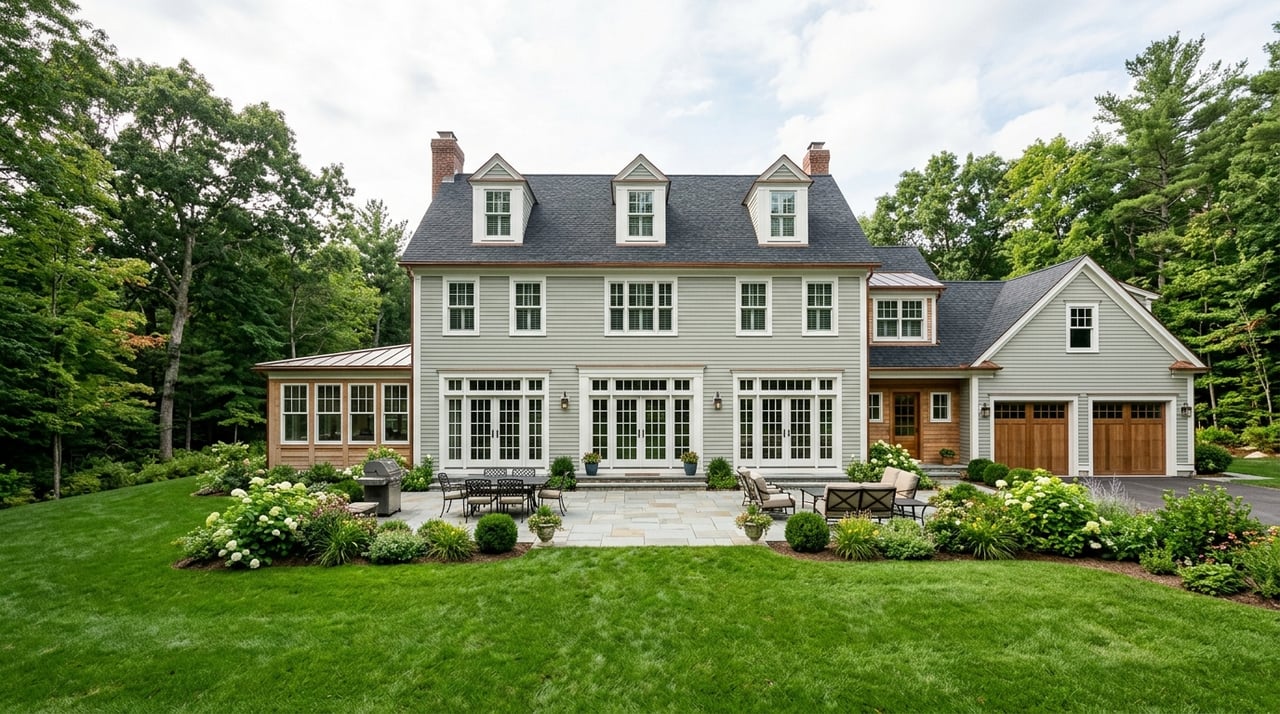
If you are thinking about new construction in Rehoboth, the first big question is not always which floor plan you like best. It is often whether building on a specific lot will be practical, affordable, and worth the timeline. In a town where parcel size, wetlands, wells, and septic can all shape the path forward, it helps to know what you are stepping into before you commit. Let’s dive in.
Why Rehoboth Feels Different
Rehoboth is a 46.5-square-mile community in Bristol County with a mix of rural and suburban neighborhoods. That local pattern matters because new construction here is often more site-specific than buyers expect.
Instead of choosing from a long list of uniform, master-planned communities, you may be evaluating an individual parcel, a small subdivision lot, or a property with unique approval needs. In Rehoboth, the land itself often drives the decision.
Build or Buy: Start With Your Priorities
For some buyers, building is the right fit because you want a certain layout, newer systems, more control over finishes, or a larger lot. That level of customization can be appealing, especially if you are trying to create a long-term home that suits your day-to-day needs.
For others, buying an existing home is the better move because you want a faster closing, more pricing clarity, and fewer unknowns. In Rehoboth, that trade-off is especially important because site conditions and approvals can change both your budget and your timeline.
A simple way to frame the choice is this:
- Build if customization matters most and you can handle more moving parts
- Buy existing if speed, predictability, and lower approval risk matter most
What Makes a Lot Buildable in Rehoboth
Before you think about house plans, confirm that the lot is actually conforming and buildable. Rehoboth’s zoning rules support a low-density pattern with larger lots, and those standards can be a major factor in what is possible.
In Residence/Agricultural districts, the minimum lot area is 60,000 square feet with 200 feet of frontage. The bylaw also includes 30-foot front setbacks and 25-foot side and rear setbacks.
If you are considering a duplex, the lot standards are larger. Rehoboth allows one duplex only on a 120,000-square-foot lot with 300 feet of frontage.
For very large parcels, retreat-lot rules may come into play. Those require at least 360,000 square feet total, 90,000 square feet of contiguous uplands, and 50 feet of street frontage.
Why a Paper Lot Is Not Always a Practical Lot
One of the biggest mistakes buyers can make is assuming that a lot split automatically creates a straightforward building opportunity. Rehoboth’s permitting guide makes an important distinction between ANR lot divisions and definitive subdivision plans.
Even if a parcel can be divided on paper, the new lot still needs to be conforming and buildable. That means you want to understand frontage, setbacks, uplands, access, and any other practical limitations before you move too far down the road.
The Planning Board is the local authority for the Subdivision Control Act and reviews preliminary and definitive subdivision plans. The board also recommends pre-submission review, and there is no fee for that service.
That is a useful early step because it can help you identify issues before you spend time and money on plans that may need to change.
Check the Current Zoning Map
Zoning should always be verified, not assumed. Rehoboth has been working through overlay-district materials in 2025 and 2026, so older assumptions may not reflect the current map or bylaw status.
If you are comparing lots, make current zoning confirmation part of your first round of due diligence. It is one of the easiest ways to avoid surprises later.
Permits Can Affect Budget and Timing
All new construction in Rehoboth should be coordinated with the Building Department. The town states that building permits are required for all new construction for any type of building.
The town also uses online permitting for many departments, but some projects still require paper copies and plan distribution when multiple boards or departments are involved. That may not sound dramatic, but it is one more reason why a local, organized process matters.
In many cases, you are not dealing with just one permit. You may be coordinating planning, conservation, building, and health review, depending on the parcel and the scope of work.
Wetlands Are a Major Local Factor
Wetlands are one of the biggest reasons a buildable-looking lot may become more complicated in Rehoboth. The Conservation Commission says you should contact the commission if you plan to build, grade, clear, or otherwise work within 100 feet of a wetland or within 200 feet of a brook, stream, or river.
A Notice of Intent is required when proposed work is within 50 feet of a wetland or within 200 feet of a brook, stream, or river. Rehoboth also notes a common local pattern of bordering vegetated wetlands and riverfront constraints.
In practical terms, this means a lot that looks open enough for a house may still have meaningful limits on where you can place the home, driveway, grading, or other improvements. Wetlands review can influence both design and schedule.
Well and Septic Need Early Attention
In Rehoboth, private wells and septic systems are often separate approval tracks from the house permit. That is why the water and wastewater plan should be one of your first checkpoints, not an afterthought.
For wells, Massachusetts places primary jurisdiction with local boards of health, and only Massachusetts registered well drillers may install them. Rehoboth’s local well regulations require a Board of Health permit for a suitable water supply before construction begins on a building intended for human occupancy.
The local submission requirements include a plot plan showing the well, sewage disposal location, driveways, and nearby wells or septic systems. That level of site detail tells you how closely these systems are tied to lot layout.
Septic design is just as important. Title 5 governs the siting, construction, inspection, upgrade, and expansion of on-site sewage systems, and new construction must meet Title 5 design standards.
For a buyer, the takeaway is simple: soil conditions, groundwater conditions, and septic design can be just as important as the house itself. On some lots, they may be the deciding factor.
Rehoboth New Construction Is Often Small-Scale
Official town notices show that much of Rehoboth’s new-build activity happens in subdivision-style projects or street-acceptance phases rather than in giant planned communities. Town records reference examples such as Rehoboth Country Club phases II and III, Muriel Way, The Fairways, The Reserve at Spring Hill, and a Veader Farm Road subdivision lot.
That does not mean you will not find new homes to buy. It means the market often requires a closer look at road status, lot history, utilities, and approval details.
If you are shopping new construction here, it helps to think less like a catalog buyer and more like a careful evaluator of a specific property.
What Timeline Should You Expect?
Nationally, the average time to complete a single-family home was 10.1 months in 2023, according to NAHB. That is a helpful benchmark, but it should be treated as general context, not a promise for Rehoboth.
In this market, projects can take longer because approvals may involve land division review, wetlands review, well approval, septic design, and site-specific permitting. The more variables tied to the parcel, the more schedule risk you should expect.
If your move has a firm deadline, buying an existing home may offer a smoother path. If your timing is more flexible, building may still be worth it for the customization and long-term fit.
What Costs Should You Compare?
National construction data also helps explain why new construction budgets can shift. In NAHB’s 2024 Construction Cost Survey, the average finished lot cost was $91,057, the average total construction cost was $428,215, and the average sales price of the new single-family home in the survey was $665,298.
The same survey found that construction accounted for 64.4% of the final price and the finished lot accounted for 13.7%. These are national benchmarks, not Rehoboth-specific quotes, but they are useful for understanding how land and site work can become a major share of the total.
In Rehoboth, municipal costs also sit outside hard construction costs. Planning Board fee schedules include subdivision-related application and per-lot charges, and separate processes may apply for planning, conservation, building, and health review.
That means a realistic budget should account for more than the builder’s contract price. Site work, permitting, well, septic, and review fees can all affect your final number.
Ask Better Questions Before You Commit
Whether you are buying a lot or considering a new-build home, asking the right questions early can save you time and money later. A calm, project-based approach is especially valuable in a town like Rehoboth.
Here are a few smart questions to raise at the start:
- Is the lot conforming under current zoning?
- Has the lot been reviewed for wetlands constraints?
- What is the plan for private well approval?
- What is the septic design status under Title 5?
- Is this an ANR lot, part of a subdivision, or tied to additional approvals?
- What permitting steps are still outstanding?
- What timeline assumptions are based on actual approvals versus best-case expectations?
- What builder warranty is included, and what exclusions apply?
On the warranty side, it is important to ask what is covered, for how long, and what is not included. A builder warranty can be helpful, but it is not the same thing as a blanket defect guarantee.
When Building Makes Sense
Building in Rehoboth may be the right choice if you:
- Want a custom layout or specific finishes
- Need newer systems and lower-maintenance materials
- Value a larger lot or more separation between homes
- Can handle a longer timeline with more approvals
- Are comfortable making decisions as site details come into focus
For the right buyer, that process can be worth it. You get more control and a home shaped around your priorities.
When Buying Existing Makes Sense
Buying an existing home may be the stronger option if you:
- Need to move on a firmer schedule
- Prefer more pricing certainty
- Want fewer permitting and site-related unknowns
- Would rather evaluate a finished property than manage a build process
- Want a lower-friction path from offer to closing
That does not mean existing homes are always simpler in every way. It means they usually involve fewer variables than raw land or site-driven new construction.
A Practical Rehoboth Decision Framework
If you are trying to choose between building and buying in Rehoboth, focus on four practical takeaways:
- Verify the lot is buildable. Do not assume a parcel works just because it exists on a map.
- Confirm well and septic early. Water supply and wastewater planning can shape the entire project.
- Expect a multi-month process. Rehoboth new construction often involves several review tracks.
- Compare certainty versus customization. Existing homes usually offer more predictability, while building gives you more control.
The best decision depends on your timeline, your budget flexibility, and your comfort level with site-specific variables. In Rehoboth, those details matter as much as the home itself.
If you want a calm, organized way to compare land opportunities, new construction, and existing homes in Rehoboth, Brian Jodoin can help you evaluate the options and build a plan that fits your timeline.
FAQs
What should you check before buying land in Rehoboth?
- Confirm the lot is conforming and buildable under current zoning, and check whether wetlands, frontage, setbacks, well approval, or septic design could limit the project.
How large does a Rehoboth building lot usually need to be?
- In Residence/Agricultural districts, the minimum lot area is 60,000 square feet with 200 feet of frontage, plus required setbacks.
Do Rehoboth new builds usually need wetlands review?
- Many do, because the town notes common local wetland and riverfront constraints, and work near wetlands, brooks, streams, or rivers may require Conservation Commission review.
Are well and septic approvals separate from a house permit in Rehoboth?
- Yes. Private well and septic approvals often follow separate review tracks, and both should be evaluated early in the process.
Is building a home in Rehoboth faster than buying an existing home?
- Usually not. Building often takes longer because of site review, permits, wetlands considerations, and well and septic approvals.
What is the biggest difference between building and buying in Rehoboth?
- Building offers more customization, while buying an existing home usually offers more certainty on price, timing, and overall process.
